
Roughly A Hundred ALT Candidates Rejected By Frontierless Ltd. After Testing Positive For Excessively High Extraversion, Deemed Incompatible With The Japanese School Environment
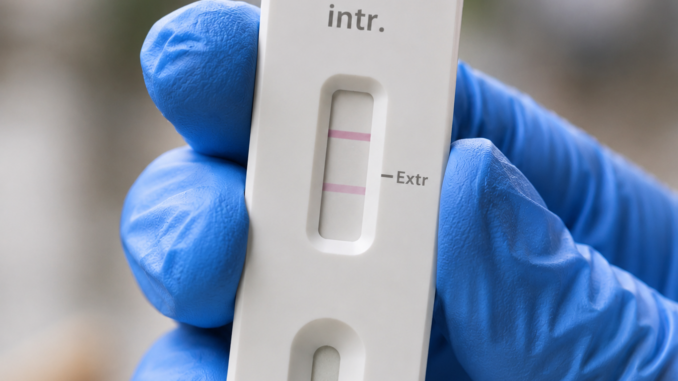
TOKYO — Frontierless Ltd., one of Japan’s largest ALT dispatch companies, confirmed this week that approximately one hundred candidates have tested positive under its new Extraversion Compatibility Assessment (ECA), a screening now administered alongside the standard drug and urine panel, and have been rejected as a direct result.
“A positive result is a positive result,” said one Frontierless Ltd. recruitment officer, describing the affected candidates in the same clinical tone usually reserved for controlled substances. “These candidates showed levels of extraversion well above the threshold considered compatible with the Japanese school environment. We take no pleasure in this. But we also cannot, in good conscience, place someone who tested positive for that much enthusiasm into a first period homeroom.”
The ECA is a proprietary test designed to measure a candidate’s ability to be socially outgoing at precisely the correct moment, and to switch that same outgoingness off completely the instant Japanese workplace convention requires quiet, restraint, or simply standing very still near the photocopier for reasons that will never be explained to anyone, ever.
“It’s really quite simple,” explained Dr. Naoyuki Hazama, lead behavioral consultant for Frontierless Ltd.’s newly formed Cultural Calibration Division. “A Japanese child absorbs this timing instinctively, over roughly eighteen years, through thousands of tiny corrections nobody remembers giving. A twenty-four-year-old from Ohio does not have eighteen years. He has a TEFL certificate and a strong opinion about how genki he should be during self-introductions. We are simply trying to compress a childhood’s worth of social calibration into a ninety-minute multiple choice exam, administered in a conference room that smells faintly of instant coffee.”
Candidates who score too high on extraversion are flagged as “recess energy, indoors.” Candidates who score too low are flagged as “possibly dead inside.” The narrow band in between, according to internal documents, is referred to only as The Corridor.
The Restroom Duration Test
More controversial still is the newly instituted Restroom Duration Test (RDT), which requires candidates to use a company restroom under (loosely) supervised conditions, with a hard ceiling of eight minutes. Company researchers say the number was not chosen arbitrarily.
“Eight minutes is the threshold,” said a Frontierless Ltd. spokesperson, “beyond which internal polling shows more than half of Japanese vice principals begin, quietly and without ever saying so directly, to consider the length of time genuinely excessive. And once a vice principal starts thinking that, the psychological literature is extremely clear: it is a very short road from ‘that is a long time to be in the restroom’ to ‘this dispatch company cannot be trusted’ to a strongly worded, extremely polite email requesting immediate contract termination.”
Testimonials From Partner Schools
To illustrate the stakes, Frontierless Ltd. shared several testimonials from partner schools.
“Eight minutes, yes, that is already too long, I think,” said one vice principal at a public elementary school in Kyoto Prefecture, who asked to be identified only as Kyotosensei. “Six minutes, this is understandable. A person has a stomach. But eight minutes, this makes the other teachers start to wonder what is happening in there. Is he checking his phone? Is he reading something? We do not ask. We simply begin, quietly, to wonder about the contract.”
“For me it was actually seven minutes,” offered a second vice principal, from a different Kyoto Prefecture elementary school, also going by Kyotosensei, in what dispatch staff insist is coincidental and not at all a sign that every vice principal in the prefecture has agreed on a single alias. “But I want to be fair to the ALT. Seven minutes on a busy day, with the good coffee available in the staff room, this can happen to anyone. I did not report it. I only mentioned it, once, to the head teacher, and then again at the end of term meeting, for context.”
“It is less about the number, more about what it represents,” added a third administrator, also a vice principal, also declining to give a name beyond Kyotosensei, in a pattern the dispatch company describes as “statistically unremarkable.”
The Bryan Problem
Not all feedback concerned restrooms. One recurring theme in the testimonials was a teacher referred to only as Bryan, whose post-lunch volume in the staff room has become something of a fixture in regional ALT-management circles.
“After lunch, when Bryan begins to speak, it is very loud,” said one staff room colleague, requesting anonymity “for professional reasons, and also because Bryan sits quite close to me.” “It is not that what he says is bad. Often it is about American football, or about a video game, or about how the convenience store onigiri here is different from the ones at home. It is only the volume. The whole staff room becomes his volume. Some teachers have started eating lunch in the stairwell.”
“We love Bryan,” clarified a school administrator, unprompted, before adding, “but we have also asked Bryan, three separate times, using three separate levels of directness, if he could perhaps lower his voice after lunch, and Bryan has each time said yes, of course, no problem at all, and then continued at the same volume the following day, which our researchers now classify as its own distinct psychological pattern requiring further study.”
Future Screening Measures
Frontierless Ltd. maintains that the new screening measures have already proven effective, noting a sharp decline in what internal memos call “candidates who technically pass everything but somehow still feel wrong.” The company says it plans to expand the program next quarter with a Nomikai Exit Timing Module, which will assess a candidate’s ability to correctly identify the socially acceptable moment to leave a work drinking party, currently estimated by internal researchers at “some time after the second toast, but strictly before anyone starts singing.”
Leave a Reply