

-
- Tokyo, November 13, 2025
Following a scandal that officials are calling “the most embarrassing labor meltdown since the fax machine ban proposal,” the Japanese government has announced it will replace all foreign Assistant Language Teachers (ALTs) with AI-powered systems by July 2026.
The move comes after weeks of public outrage, not at the working conditions, but at the foreigners themselves, who, despite being employed, publicly complained about “unfair pay” and “unequal treatment.” The spectacle of foreign teachers striking while Japan continued functioning perfectly without them has reportedly caused “a deep sense of collective humiliation.”
“Enough of the whining,” says MEXT
According to the Ministry of Education, Culture, Sports, Science and Technology (MEXT), the decision was motivated by what officials described as “terminal ALT fatigue.”
“For years, we tolerated the drama,” said one MEXT spokesperson. “They wanted more money, less work, longer vacations, and emotional validation. We realized a $200 ChatGPT subscription would be quieter, cheaper, and more polite.”
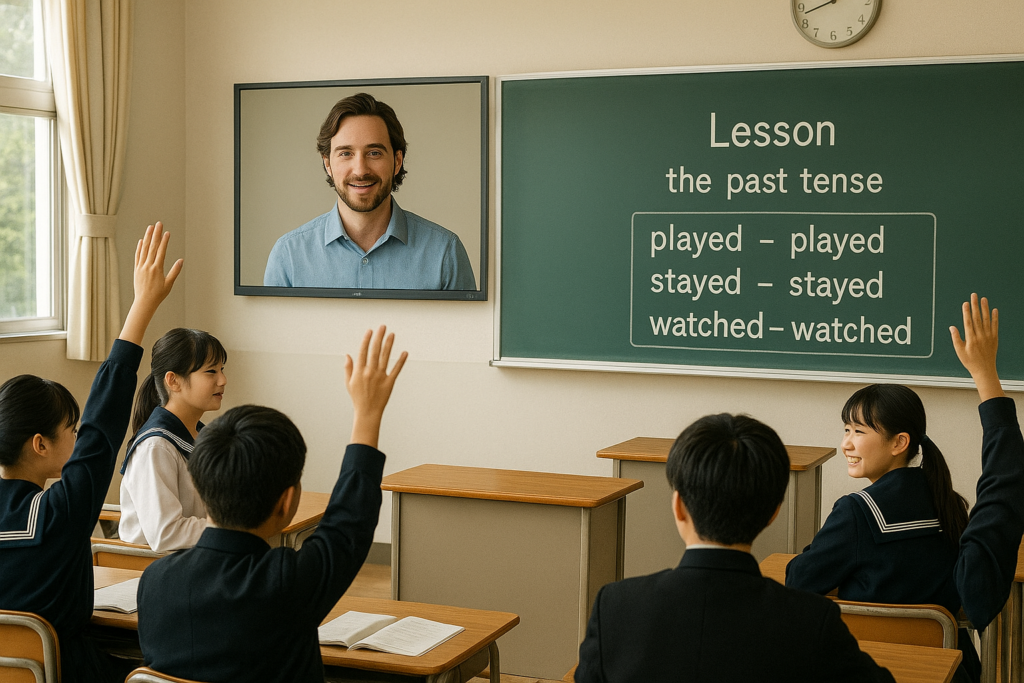
The AI will reportedly be implemented via denshi kokuban (electronic blackboards) and trained to say things like “Great job!” and “Wow, your pronunciation is amazing!” at statistically appropriate intervals. Officials estimate that replacing every human ALT in Japan with AI will save enough money to build 14 new Shinkansen lines and one Olympic stadium in Tottori.
Foreign outrage, domestic relief
Many ALTs expressed shock and disbelief. “This decision devalues the human experience,” said Benjamin Blake striking ALT from Kyoto. “Students need warmth, spontaneity, and connection.”
His students, interviewed the following day, disagreed. “The AI doesn’t talk about its visa problems,” said one junior high student. “It also doesn’t look tired or smell beer since the morning ”
Japanese teachers welcomed the change. “We just want peace,” said one homeroom teacher. “No more crying in the staff room about cultural misunderstandings.”
The end of the ALT era
Experts say this marks the end of an experiment that lasted more than 30 years, one that began with optimism and ended with angry Facebook posts about unpaid summer vacations.
The government insists the move is not anti-foreigner but “pro-efficiency.” According to MEXT, the AI system can teach perfect pronunciation, never files for labor mediation, and “doesn’t think Kyoto Prefecture owes it an apology.”
In a final statement, MEXT summarized the reform:
“Japan values education. We just value silence, obedience, and consistent attendance slightly more.”
The AI rollout begins April 2026, with pilot programs already outperforming human teachers in vocabulary, grammar, and not complaining online.
Analysts predict that by 2030, all English lessons in Japan will be taught by AI, or by Japanese teachers pretending to be AI to avoid conversation.
Leave a Reply